


Table of Contents
- Why Physical Exercise Alone Isn't Enough
- How Much Exercise Does a High Energy Dog Need?
- The Power of Mental Stimulation for Dogs
- Best Toys for High Energy Dogs That Engage the Brain
- Training Exercises to Tire Out High Energy Dogs Fast
- Recognizing the Over-Tired Dog Phenomenon
- Low-Impact Options for Senior High-Energy Dogs
- Conclusion: Build a Routine That Balances Rest and Play
- Frequently Asked Questions
Last Updated: September 9, 2026
Why Physical Exercise Alone Isn't Enough
If you have a high-energy dog, you've probably tried the classic approach: longer walks, more fetch, endless runs until your arm gives out. Yet your dog still paces, whines, or chews your baseboards. The disconnect happens because physical activity and mental exhaustion are two entirely different systems, and most owners only target one.
To tire out high energy dogs, you must engage the brain, not just the body. A dog that sprints for an hour has exercised muscles, but their mind is still racing at full speed. The real solution lies in shifting your strategy from pure exertion to a blend of physical work and cognitive challenges that leave your dog genuinely satisfied. The real solution lies in shifting your strategy from pure exertion to a blend of physical work and cognitive challenges that leave your dog genuinely satisfied.
How Much Exercise Does a High Energy Dog Need?
The honest answer is that there is no universal number, because breed, age, and individual temperament all change the equation. Working breeds like border collies, Australian shepherds, and Belgian malinois were selectively bred for hours of daily stamina, so a 20-minute walk is a warm-up, not a workout (akc.org).
But lumping all high-energy dogs into one category is a mistake. The most effective routines differentiate between the type of energy your dog was bred for. A herding dog's drive is rooted in a need to control movement and respond to cues, while a sporting or hunting breed like a Labrador or a German Shorthaired Pointer is driven by a need to search, retrieve, and track. A terrier's energy is often channeled into prey-chasing and digging. If you only run a herding dog, you exhaust the muscles but leave the instinct to "work" unfulfilled. If you only play fetch with a sporting breed, you might miss the deep satisfaction of a scent trail.
A practical starting point for most high-energy adult dogs is 60 to 90 minutes of purposeful activity daily, split into two or three sessions rather than one exhausting block (vcahospitals.com). That time should mix structured exercise like fetch or jogging with obedience work and free sniffing time. The goal is to see your dog settle within about 15 minutes of coming inside. If they still pace or pester you for play, they likely need more mental engagement rather than another lap around the block.
To build a routine that actually works, use the "Rule of Three" to audit your dog's day:
- Physical Exertion: This is the baseline. For most breeds, this means a brisk walk or a game of fetch that gets the heart rate up, not a slow stroll.
- Mental Engagement: This is the non-negotiable second pillar. A 10-minute nose-work session or a puzzle feeder for a meal can be as draining as a 3-mile run.
- Structured Rest: This is the most overlooked pillar. High-energy dogs often don't know how to shut off. You must schedule downtime in a crate or quiet room, just as you schedule a walk.
Here is a sample daily framework for a typical high-energy adult dog (adjust to your schedule):
- Morning (15-20 min): A brisk walk or jog, followed by 5 minutes of obedience drills (sit, down, heel) to start the day with a focused mindset.
- Midday (10-15 min): A meal served via a puzzle toy or snuffle mat to engage the brain during the workday lull.
- Evening (30-45 min): A high-intensity session like fetch, flirt pole, or swimming. Finish with a 10-minute "find it" game where you hide treats around the house to encourage a natural cool-down.
The Power of Mental Stimulation for Dogs
Mental stimulation for dogs is often the missing ingredient in an enrichment routine. A 15-minute training session that requires focus and problem-solving can leave a dog more tired than a 5-mile run, because thinking hard burns significant mental energy (peer-reviewed research).
Scent work is one of the most effective tools here. Dogs process the world through their noses, and giving them a job that uses that ability triggers deep satisfaction. Try scattering a portion of their kibble across the lawn or hiding treats around a room and asking them to "find it." This activity, sometimes called a "sniffari," taps into natural foraging instincts and produces genuine mental fatigue. When you pair these brain games with physical exercise, you address both the physical exertion and the cognitive need that drives destructive behavior.
Best Toys for High Energy Dogs That Engage the Brain
The best toys for high energy dogs are those that make them think, not just chase. Puzzle feeders, snuffle mats, and interactive toys that dispense kibble force a dog to problem-solve for their reward, which builds patience and impulse control.
For dogs with serious chew drive, durability matters more than novelty. A toy that shreds in minutes teaches frustration, not calmness. At HomeBodyPet, our signature herding ball stands up to heavy use because we hand-select and pet-test every product in our own home before offering it. The ball's unpredictable rolling pattern triggers a dog's natural herding instincts, keeping them engaged for long stretches without you having to throw it once.
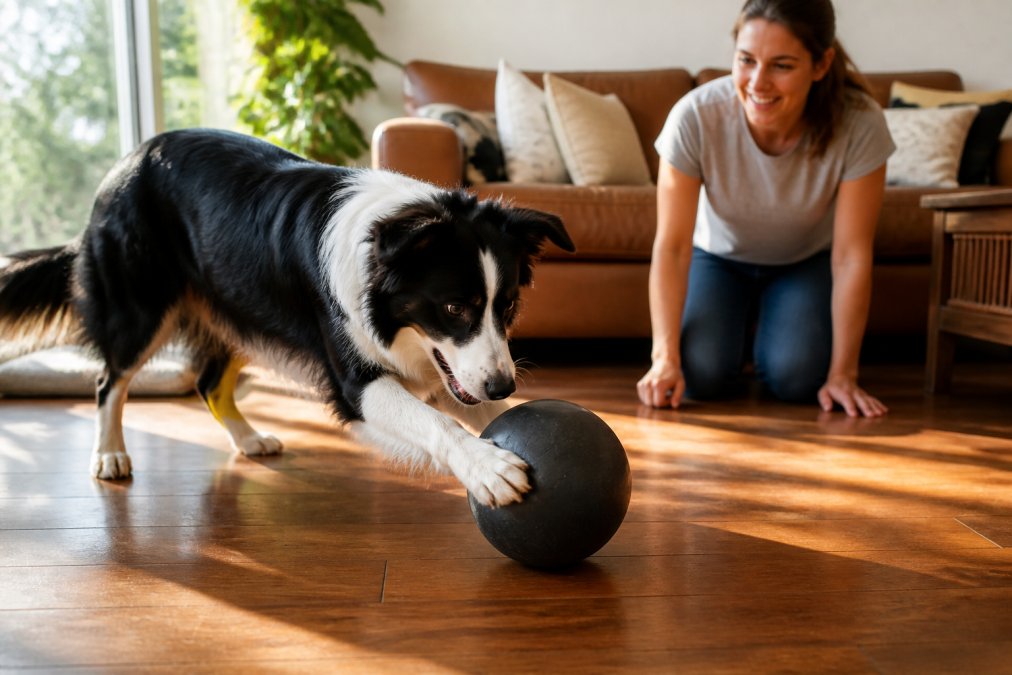
When choosing toys, rotate them every few days. A toy that's always available loses its novelty, but swapping two or three options keeps your dog curious and engaged. Budget-friendly DIY options work too: an empty cardboard box with treats hidden inside, or a muffin tin with kibble tucked under tennis balls, provides the same problem-solving challenge without a trip to the store.
Training Exercises to Tire Out High Energy Dogs Fast
Training sessions are the fastest route to a calm dog, provided you structure them around focus rather than just commands. Trick training, obedience drills, and impulse-control exercises all require a dog to think, which accelerates mental fatigue.
Try this sequence for a quick but effective session:
- Start with a "settle" exercise: ask your dog to lie down and stay while you move a few steps away, then reward calm behavior.
- Move to a "wait at the door" drill to build impulse control before going outside.
- Practice "touch" or "target" work, asking your dog to nose your palm on cue.
- Finish with a few rounds of hide-and-seek, hiding yourself or a favorite toy in another room.
- End with a chew session or a frozen treat to encourage a natural wind-down.
The key is positive reinforcement throughout. Keep sessions to 10 or 15 minutes, because a tired, frustrated dog learns nothing. A short daily routine of calmness training, where you reward relaxed postures, teaches your dog that being calm is the behavior that pays off.
Recognizing the Over-Tired Dog Phenomenon
An over-tired dog often looks like a dog that needs more exercise, which is exactly why so many owners misread the signs. When a dog is exhausted but still wired, they may pace, whine, become reactive, or engage in frantic chewing. This "over-tired" state mirrors a toddler's meltdown, and the fix is enforced rest, not another walk.
This creates a vicious cycle: the more you exercise an over-aroused dog, the more adrenaline and cortisol flood their system. This creates a vicious cycle: the more you exercise an over-aroused dog, the more adrenaline and cortisol flood their system. Instead of reaching a state of calm exhaustion, they become what trainers call "adrenaline junkies," unable to settle even when their bodies are spent.
How to Tell the Difference: High Energy vs. Over-Tired
Use this checklist to diagnose the state of your dog after activity:
| Sign | High Energy (Needs More Engagement) | Over-Tired (Needs Rest) |
|---|---|---|
| Body Language | Loose, wiggly, play-bowing, "soft" eyes | Stiff posture, tense mouth, dilated pupils, frantic panting |
| Behavior | Brings you toys, offers known behaviors, follows you with a relaxed tail | Paces aimlessly, whines without a clear trigger, becomes easily frustrated or snappy |
| Response to Cues | Eagerly responds to commands, even if sloppy | Ignores known commands, makes silly mistakes, seems "spacey" |
| Response to Rest | Will settle if you stop engaging, but may start again after a short nap | Cannot settle on their own; may wake up from a nap still wired and frantic |
The Recovery Protocol: How to Enforce Rest
If your dog cannot settle after activity, do not offer more exercise. Instead, initiate a structured "settle" session:
- Move to a Quiet Zone: Take your dog to a crate or a quiet room away from household traffic. This removes the stimulation that is fueling the arousal.
- Give a Calming Job: Provide a long-lasting chew, a frozen Kong stuffed with wet food, or a Lickimat smeared with peanut butter. The repetitive action of licking and chewing releases calming endorphins.
- Ignore and Wait: Do not talk to, pet, or make eye contact with your dog until they have visibly relaxed. This teaches them that calm behavior is what earns your attention.
- Enforce a Nap: After the chew is gone, keep them in the quiet space until they fall asleep. A high-energy dog often needs a solid 1-2 hour nap to reset their nervous system.
Low-Impact Options for Senior High-Energy Dogs
High energy doesn't disappear with age, but the joints that supported those zoomies become less forgiving. For senior high-energy dogs, the focus shifts to low-impact exercise that protects hips and knees while still providing mental engagement.
Swimming is an excellent option because it builds canine fitness without jarring impact. On land, stick to gentle leash walks on soft surfaces and increase the ratio of mental work to physical work. A senior dog with a young dog's drive still craves a job, so lean heavily on scent work, trick training, and puzzle toys that let them work their brain without stressing their body. If you have a young husky and a senior dog with joint issues, separate sessions let each dog work at their own pace.
Conclusion: Build a Routine That Balances Rest and Play
Tiring out high energy dogs is about quality, not just quantity, of activity. The winning formula combines physical exercise with mental stimulation for dogs, structured rest, and toys that reward problem-solving. Start by auditing your current routine, then add one new element, whether that is a daily training session, a scent game, or a durable puzzle toy. Watch how your dog responds and adjust the mix until they settle naturally after activity.
At HomeBodyPet, we built our business around this exact challenge. Our family hand-selects and tests every product, from our herding ball to our comfort gear, so you get durable essentials that genuinely stand up to high-energy play. We deliver directly to your door without retail markups, because we believe active dogs deserve gear that lasts and owners deserve a routine that actually works.
Frequently Asked Questions
Can mental stimulation tire out a dog faster than physical exercise?
Yes, for most high-energy dogs, mental work produces faster and longer-lasting fatigue. A 15-minute nose-work session or puzzle toy challenge can leave a dog more settled than a 30-minute run. This happens because focusing, sniffing, and problem-solving require sustained concentration, which burns significant mental energy. For working breeds, this type of engagement feels like a real job, which satisfies their instinct to work. Pairing mental games with short bursts of physical activity gives you the best results for calming an overactive pup.
What is the 3-3-3 rule for dogs?
The 3-3-3 rule describes the adjustment period for a new dog in your home: 3 days to feel overwhelmed, 3 weeks to settle in, and 3 months to build trust and bond. During the first 3 days, high-energy dogs often show anxiety or excessive excitement. By 3 weeks, they start understanding your routine. Full personality and comfort typically emerge around 3 months. If you're working to tire out a newly adopted high-energy dog, keep exercise consistent but not overwhelming during this transition.
At what age do high energy dogs calm down?
Most high-energy breeds begin showing signs of calmness between 2 and 3 years of age, though this varies. Working breeds like Border Collies, Australian Shepherds, and Belgian Malinois may retain high drive well into adulthood. Mental and physical maturity happen together: as the dog's brain fully develops, impulse control improves. Consistent training and daily enrichment from puppyhood help speed up this process. Even after the 'calm down' age, these dogs still need regular exercise and mental challenges to stay balanced.
Building a balanced routine takes patience, but the payoff is a calmer, happier dog and a more peaceful home. Explore our selection of durable, pet-tested enrichment toys and see which tools fit your dog's energy level. Get started with HomeBodyPet and give your high-energy companion the mental and physical outlet they need to thrive.


