


Table of Contents
- Why Does My Dog Shred Toys? The Instinct Behind the Mess
- Anxiety, Stress, and Destructive Chewing
- Teething and Age-Specific Chewing Profiles
- Durable Toys for Aggressive Chewers: What Actually Holds Up
- Mental Stimulation for High-Energy Dogs: Tiring the Mind First
- How to Stop Dog Destroying Toys: A Step-by-Step Plan
- Frequently Asked Questions
Last Updated: September 11, 2026
Why Does My Dog Shred Toys? The Instinct Behind the Mess
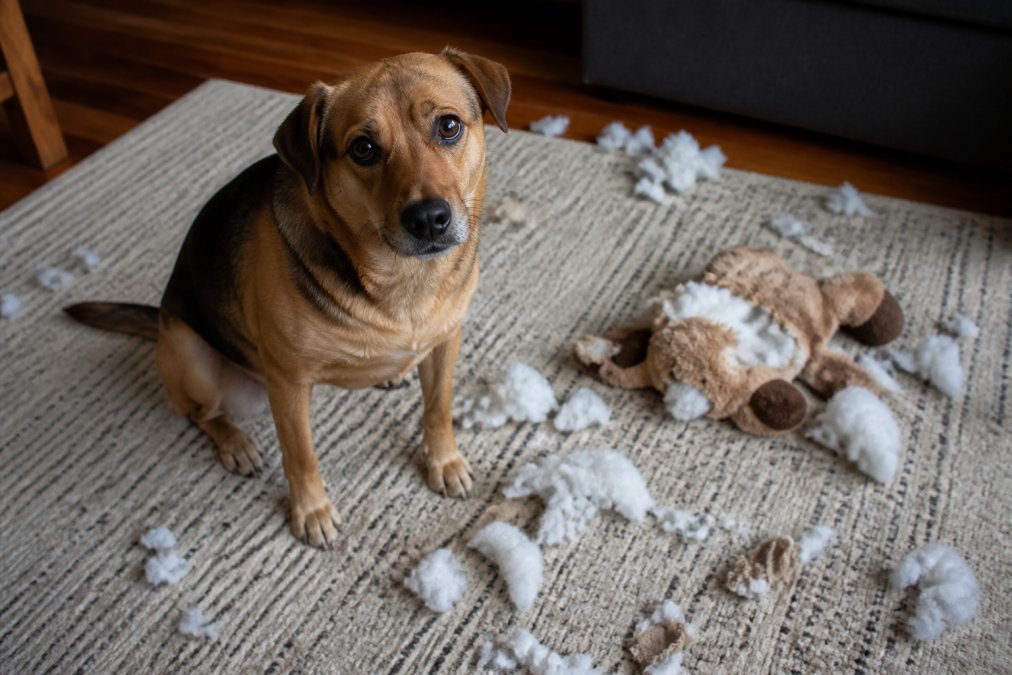
If your dog shreds toys, they are not being spiteful or "getting even" for time alone. According to the American Veterinary Medical Association's pet behavior resources, destructive chewing in dogs is rooted in natural canine behavior, not defiance. At HomeBodyPet, we've observed that the pattern of toy destruction is almost always the same: instinct, boredom, or stress, rarely bad manners.
Toy shredding is the act of a dog tearing, de-stuffing, or breaking apart a toy using their teeth and paws, driven by natural prey drive, a need for mental stimulation, or an emotional state such as anxiety. Below, we break down what actually drives the behavior and how to redirect it before your dog ingests something dangerous.
Prey Drive and the Satisfaction of Completion
Shredding satisfies a deep-seated prey drive. When a dog rips open a squeaky toy, the squeak mimics prey distress, and pulling out the stuffing mimics disemboweling a catch. That sequence delivers a genuine sense of completion, which is why a dog often loses interest the moment the toy is fully destroyed.
A common mistake is buying a tougher version of the same plush toy. If the goal is the shredding sequence itself, a sturdier plush just delays the inevitable. Redirecting that drive toward a snuffle-style foraging toy or a puzzle feeder gives the dog a legitimate outlet for the same instinct.

Boredom and the Need for Mental Stimulation
Boredom is the second major driver. A dog left with the same three toys for weeks will often invent their own game, and destruction is a very efficient game.
Mental stimulation tires a dog faster than physical exercise alone. A common approach is rotating toys so the lineup feels new every few days, and swapping in enrichment tools that require problem-solving rather than pure jaw strength.
Anxiety, Stress, and Destructive Chewing
Destructive chewing often spikes when a dog is anxious, not bored. Chewing is self-soothing for dogs, and a dog with separation anxiety will frequently target the items their owner touched last.
Watch the timing. If the damage happens within the first 30 minutes after you leave, that points to separation anxiety rather than boredom, which usually shows up later in the day once the dog has run out of other things to do (aspca.org).
For anxious dogs, calming tools help more than tougher toys. A lick mat spread with wet food or peanut butter engages the same repetitive, soothing behavior as chewing, but in a way that de-escalates rather than destroys.

Teething and Age-Specific Chewing Profiles
Age changes the reason a dog chews, and the fix has to change with it.
- Puppies (under 6 months): teething drives constant mouthing. Soft, flexible chew toys relieve gum pressure.
- Adolescents (6-18 months): high energy plus undeveloped impulse control. Durable toys and structured exercise matter most.
- Adults (1-7 years): chewing is usually boredom or habit-based. Enrichment and rotation solve most of it.
- Seniors (7+ years): chewing may signal dental pain or cognitive changes. A vet visit is warranted before assuming it is behavioral.
A common mistake is handing a teething puppy a rock-hard chew meant for an adult power chewer. That can crack puppy teeth. Match the toy's hardness to the dog's age and jaw strength, not the other way around.
Durable Toys for Aggressive Chewers: What Actually Holds Up
No toy is indestructible, and any product claiming otherwise is marketing, not engineering. The honest framing is "durable" versus "destroyed in five minutes," and the difference comes down to material, construction, and how well the toy matches your dog's specific chewing style.
Start by profiling the chewer, not the toy. Watch how your dog attacks a new toy for the first ten minutes and sort them into one of three styles:
- The de-stuffer. Targets seams and openings, works the toy open, then pulls out filling. Cares about the sequence, not the material.
- The crusher. Applies steady jaw pressure until something cracks or compresses. Cares about density and give.
- The gnawer. Works one spot with the back molars for long stretches. Cares about texture and how the surface wears down.
A toy that survives a crusher can be gutted by a de-stuffer in minutes, and vice versa. This is why one owner's "indestructible" recommendation is another owner's shredded plush.
Reading a Toy Before You Buy It
When you shop for durable toys for aggressive chewers, look for solid, single-piece construction with no seams to rip, no squeakers to extract, and no stuffing to pull out. Beyond that, check for:
- Wall thickness. A hollow rubber toy with thin walls collapses under a crusher. Squeeze it in the store; if it flexes easily, it is a moderate-chewer toy.
- Hardness rating. Most rubber toys are sold on a soft-to-firm scale. Match the rating to your dog's style: soft rubber for gnawers and seniors, firm rubber for crushers, dense nylon for power chewers.
- Size relative to the jaw. A toy should be too large to swallow whole but small enough for the dog to hold comfortably. When in doubt, size up.
- Wear indicators. Some rubber toys are designed to show wear before they fail. Check the surface after every session for cracks, missing chunks, or exposed interior.
Rubber and dense nylon hold up far better than plush, but they are not interchangeable. Nylon is abrasive and can wear down enamel if a dog gnaws it for hours a day. Rubber gives slightly, which is gentler on teeth but fails faster under a determined crusher. Rotate between the two rather than relying on one.
The Destruction-Friendly Toy Category
For dogs who specifically love the shredding sequence, the goal is not to stop the destruction but to make it safe. This is the category most articles skip entirely, and it is where the real fix lives for de-stuffers.
Destruction-friendly toys are built to be taken apart on purpose. Common formats include:
- Snuffle balls with removable fabric folds that a dog pulls out one strip at a time.
- Layered plush toys with a squeaker inside a plush inside a plush, so the dog gets the reveal without loose stuffing.
- Cardboard-and-treat puzzles where the dog shreds a paper shell to reach food.
- Rope toys with knotted ends that can be untied and re-tied rather than chewed through.
The rule for this category is simple: if the dog can pull a piece off, that piece must be small enough to pass or large enough to be seen and removed. Never leave a destruction-friendly toy with a dog who swallows fabric.
| Toy Type | Best For | Chew Intensity | Watch Out For |
|---|---|---|---|
| Plush | Gentle chewers, comfort | Low | Stuffing ingestion |
| Rubber | Moderate to strong | Medium-High | Size too small |
| Nylon | Power chewers | High | Worn edges, enamel wear |
| Foraging/snuffle | Shredders, foragers | Low-Medium | Loose fabric |
| Destruction-friendly | De-stuffers | Low-Medium | Swallowed pieces |
Mental Stimulation for High-Energy Dogs: Tiring the Mind First
Tiring the mind is often more effective than tiring the body. A high-energy dog who has solved three problems in a row is frequently calmer than one who has simply run laps.
Enrichment tools do the heavy lifting here. A snuffle ball turns a handful of kibble into a 15-minute foraging session. A sliding puzzle feeder asks the dog to work for each piece of food, which channels the same focus that would otherwise go into de-stuffing a plush toy.

For a dog who needs both physical and mental work, our popular herding ball gives the dog something to push, chase, and control, which satisfies the drive to work without the destruction.
How to Stop Dog Destroying Toys: A Step-by-Step Plan
You can stop the destruction by matching the outlet to the cause, then reinforcing the right behavior. The plan below works whether the driver is prey drive, boredom, or anxiety, and it includes the safety layer most guides leave out.
Redirect, Rotate, and Reinforce
- Identify the trigger. Note when destruction happens: alone, after exercise, or during storms. Keep a simple log for a week. Patterns show up fast.
- Remove the target. Pick up destroyed toys so the habit is not rehearsed. A dog who has shredded the same toy five times has practiced the behavior five times.
- Redirect in the moment. Offer an appropriate alternative, like a puzzle feeder, and reward the switch with positive reinforcement. Timing matters more than the reward itself.
- Rotate the toy lineup. Keep three to five toys out and swap them every few days. Novelty does most of the work.
- Add daily enrichment. One foraging or problem-solving session per day. For high-drive dogs, two shorter sessions beat one long one.
- Supervise new toys. Watch the first few sessions to confirm the toy is safe for your dog's chew intensity. If it fails in under ten minutes, it is the wrong category, not a bad batch.
- Separate interactive from solo toys. Toys that require a human to throw, tug, or hide are interactive. Toys the dog uses alone must be safe to leave unattended. Mixing the two is how most blockages happen.
The Safety Layer Most Guides Skip
Shredding becomes a medical problem the moment material is swallowed. Fabric, stuffing, squeakers, and rope fibers do not break down in the digestive tract, and they can bunch into a blockage that requires surgery.
Know the signs of a possible intestinal blockage:
- Vomiting, especially repeated vomiting within a few hours of the toy being destroyed.
- Loss of appetite or refusal to drink.
- Abdominal pain, pacing, or a hunched posture.
- Straining to defecate with little or nothing produced.
- Lethargy or weakness that comes on suddenly.
If you see any of these after a toy has been shredded, call your veterinarian or an emergency animal hospital immediately. Do not wait to see if it passes. Time matters with blockages, and a dog who is vomiting and off food is already in the danger window.
When to Call Your Vet
Call your vet if your dog swallows toy pieces, vomits, stops eating, or shows signs of distress. Also call if sudden destructive chewing appears in an adult or senior dog with no prior history, since that can point to pain or a medical issue rather than behavior. According to the ASPCA's pet care guidance, sudden behavior changes in adult dogs always warrant a veterinary check before any training plan.
Frequently Asked Questions
How do I stop my dog from shredding toys?
Start by giving your dog appropriate outlets for natural instincts. Use durable toys for aggressive chewers that let them shred safely, like a snuffle ball that hides treats inside fabric folds. Rotate toys every few days to keep them novel. When your dog picks up an off-limits item, calmly redirect them to a toy they can destroy. Reward them with praise or a treat when they choose the right toy. This positive reinforcement teaches them what is acceptable to chew.
Is it normal for dogs to destroy their toys?
Yes, destroying toys is a normal canine behavior rooted in prey drive, teething, or boredom. Dogs often shred to satisfy the instinct to dissect prey or to relieve stress. The key is distinguishing normal shredding from dangerous ingestion. If your dog swallows fabric or stuffing, that can cause intestinal blockage and requires a vet visit. Supervise play and remove toys once they are small enough to swallow.
Are there specific breeds more prone to shredding toys?
Breeds with high prey drive or strong jaws, such as terriers, huskies, and retrievers, tend to shred more. Herding breeds like border collies may shred out of boredom if they lack mental stimulation for high-energy dogs. Every dog is an individual, but understanding your breed's instincts helps you choose durable toys for aggressive chewers and plan enrichment that meets their needs.
Should I replace toys as soon as they start to shred?
Replace a toy when it develops holes large enough for your dog to pull out stuffing or squeakers. Small pieces can be swallowed and cause intestinal blockage. For toys designed for shredding, like snuffle balls, monitor the fabric and discard when it becomes frayed. Rotating toys and inspecting them weekly helps you catch damage early and keeps play safe.
Toy destruction is frustrating, but it is almost always a signal that your dog needs a better outlet for a real drive. HomeBodyPet hand-selects and pet-tests durable essentials, including our Snuffle Play Ball for treat-based foraging and our Dog Puzzle Feeder for problem-solving, so you can redirect the behavior with gear that actually holds up. As a small, family-run operation, we test the same products on our own dogs before we sell them. Shop now and give your dog a job worth doing.


