


Table of Contents
- Quick Comparison: Safe Hiking Gear for Active Dogs
- The Best Dog Hiking Harness for Control and Comfort
- Hydration and Water Storage for the Trail
- Building a Dog First Aid Kit for Hiking
- Durable Outdoor Toys for High Energy Dogs
- Paw Protection, Waste Management, and Trail Safety
- Breed-Specific, Age-Specific, and Environmental Gear Considerations
- Post-Hike Recovery and Gear Maintenance
- Frequently Asked Questions
Last Updated: September 14, 2026
Quick Comparison: Safe Hiking Gear for Active Dogs
Safe hiking gear for active dogs is equipment selected to protect a dog's joints, paws, and airway while keeping them visible, hydrated, and under control on uneven terrain. This guide from HomeBodyPet breaks down the harnesses, hydration tools, first aid supplies, and trail accessories that matter most, based on what actually holds up on real trails.
Trail conditions punish cheap gear fast. A harness that rubs on mile two becomes a raw hotspot by mile five, and a dog that refuses to drink on the trail risks overheating long before the summit. The American Kennel Club's hiking safety guidance recommends building any hike plan around your dog's breed, age, and fitness level before you buy a single piece of equipment.
Below, we'll show you exactly which categories to prioritize and where most owners overspend.
| Gear Category | Priority | What to Look For | Typical Price Range |
|---|---|---|---|
| Harness | Essential | Front-clip, padded, reflective | $25-$40 |
| Long line leash | Essential | Braided nylon, swivel clip | $20-$35 |
| Hydration | Essential | Leak-proof bottle or collapsible bowl | $15-$30 |
| First aid kit | Essential | Gauze, vet wrap, tick tool | $20-$50 |
| Paw protection | Seasonal | Booties or wax balm | $15-$45 |
| Waste bags + holder | Essential | Clip-on, roll-style bags | $10-$20 |
The Best Dog Hiking Harness for Control and Comfort
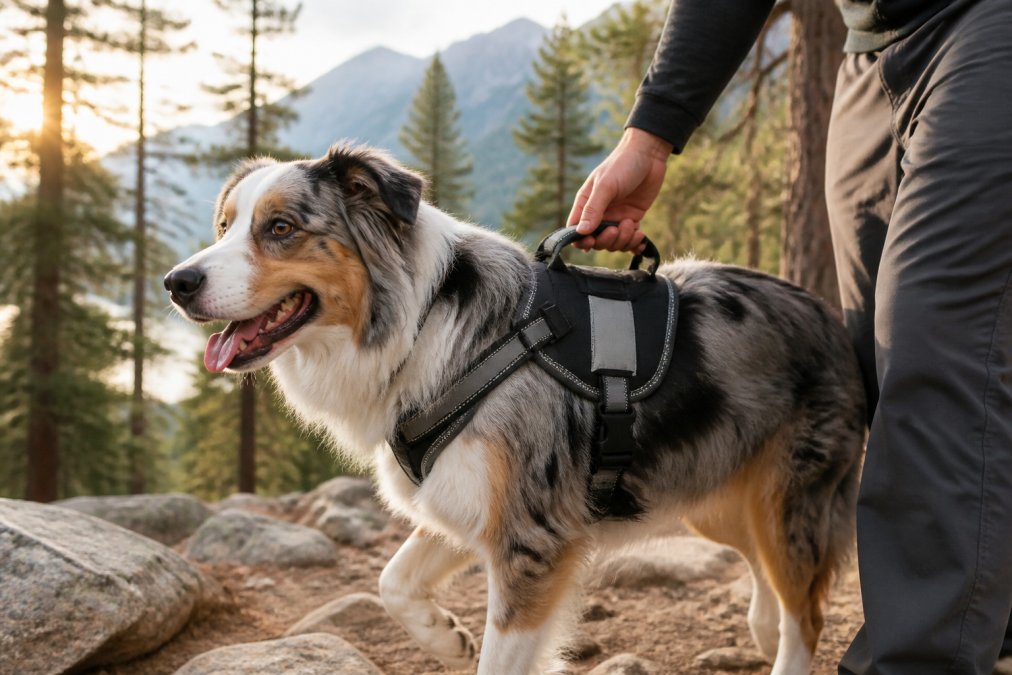
The best dog hiking harness for control is a front-clip design with padded chest panels and a back handle, because it redirects pulling force sideways instead of straining the neck. For high-energy breeds that lunge at squirrels or scramble up switchbacks, that difference decides whether you keep your footing.

Why a Front-Clip Harness Beats a Collar on the Trail
A collar concentrates every pull on the trachea and cervical spine. On flat pavement that's manageable. On a steep descent with loose scree, it isn't. A front-clip harness spreads that load across the chest and shoulders, which matters enormously for dogs bred to work.
The American Veterinary Medical Association's guidance on collar-related injury notes that repeated pressure on the neck can aggravate existing airway and thyroid conditions, particularly in smaller-framed dogs.
[HomeBodyPet's No-Pull Dog Harness](https://homebodypet.com/products/no-pull-dog-harness) ($31.99) covers the essentials: four adjustment points for an ergonomic fit, breathable padded panels, 360-degree reflective trim for early starts, and a heavy-duty back control handle for grabbing your dog at water crossings or road edges.

Pros:
- Four-point adjustment fits deep-chested and narrow-chested breeds alike
- Reflective stitching is woven through every strap, not just the chest
- Back handle gives instant close-range control
Cons:
- Front-clip steering takes a few walks to learn if you've only used back-clip harnesses
- Not designed as a load-bearing pack harness
Hydration and Water Storage for the Trail
Hydration gear is the most underrated category in hiking equipment, and the one owners most often improvise. A dog panting hard on a warm climb can lose significant moisture through respiration alone, and many dogs won't drink from an unfamiliar stream or a bowl that smells like last week's kibble.
Collapsible Bowls vs. Water Bottles
Collapsible bowls are lighter and let your dog drink at their own pace. Bottle-and-trough systems are faster, waste less water, and work one-handed while you're holding a leash.
The USDA Forest Service guidance on backcountry water safety is blunt about natural water sources: treat them or avoid them. Carrying your own supply removes the guesswork.
[HomeBodyPet's Portable Pet Water Bottle](https://homebodypet.com/products/portable-pet-water-bottle) ($24.99) uses a trigger-release trough that drains unused water back into the bottle, so nothing is wasted on a hot day. The Collapsible Travel Dog Bowl ($16.99) folds flat and clips to a leash or belt loop with its carabiner, which suits dogs who prefer to drink slowly.

| Option | Weight | Best For | Standout Feature |
|---|---|---|---|
| Collapsible bowl | Lightest | Slow drinkers, rest stops | Folds flat, clips anywhere |
| Bottle + trough | Moderate | Fast pace, one-handed use | Water returns to bottle |
| Folding bowl | Light | Multi-day trips | Dishwasher safe, odor-resistant |
Building a Dog First Aid Kit for Hiking
A dog first aid kit for hiking should cover cuts, punctures, sprains, and heat stress, because those are the four injuries that actually happen on trails. Store-bought human kits miss the pieces you need most. Build your own around a waterproof pouch.
What to pack:
- Sterile gauze pads and self-adhering vet wrap
- Antiseptic wipes and a small bottle of saline
- Tweezers and a tick removal tool
- Blunt-tip scissors and medical tape
- Paw balm and a spare bootie
- Digital thermometer
- Benadryl, only with your vet's dosage guidance
- Copy of vaccination records and your vet's phone number
- Emergency contact card and a spare leash
The ASPCA's pet poison and emergency resources maintains a 24-hour poison control line worth saving to your phone before you leave cell range.
What most guides miss is the paperwork. If your dog is injured three hours from the trailhead, the vet treating them needs vaccination history and current medication. A laminated card in the kit solves that in seconds.
Durable Outdoor Toys for High Energy Dogs
Durable outdoor toys for high energy dogs serve a real purpose on the trail: they burn off restless energy at camp and give your dog a job during rest breaks. A herding breed that spends six hours on a leash with nothing to do will find its own entertainment, usually at the expense of your tent.
Look for solid construction, no small removable parts, and a material that won't shatter into sharp edges. Toys that squeak are a liability in bear country and a magnet for every dog on the trail.
HomeBodyPet's signature herding ball was built for exactly this problem. It's the product our family tested longest before adding it to the catalog, and it's the one we reach for with our own working dogs.
Paw Protection, Waste Management, and Trail Safety
Paw protection and waste management are the two categories owners skip and then regret. Hot sand, frozen crust, and sharp granite all damage paw pads, and leaving waste on a trail is both a hygiene problem and a fast way to lose trail access for everyone.
Paw protection options:
- Booties: best for hot rock, ice, and long mileage, but require a break-in period
- Paw wax or balm: quicker to apply, good for mild abrasion, useless on extreme heat
- Musher's-style balm: protects against salt and ice in winter conditions
For waste, a clip-on holder keeps bags accessible without digging through a backpack. [HomeBodyPet's Portable Dog Waste Bag Holders](https://homebodypet.com/products/portable-dog-waste-bag-holders) ($12.99) attach to a leash, belt loop, or pack strap and take standard roll-style bags.
Visibility belongs in this category too. Reflective trim on a harness, a reflective leash, and a light on your dog's collar after dark are the difference between being seen and being missed. The National Park Service trail safety guidance recommends keeping dogs leashed on most trails, both for wildlife protection and for your dog's safety near cliffs and water.
Breed-Specific, Age-Specific, and Environmental Gear Considerations
Breed and age change your gear list more than most owners expect. A husky and a senior Labrador need different harness fits, different distances, and different recovery time.
Breed considerations:
- Deep-chested breeds need harnesses with a longer chest panel to avoid girth pressure
- Short-snouted breeds overheat faster and need more frequent water breaks
- Double-coated breeds handle cold well but struggle in summer heat
- Sighthounds have narrow chests that slip out of standard harnesses
Age considerations:
- Puppies under 18 months should avoid long mileage while growth plates are open
- Senior dogs benefit from a harness with a lifting handle for stream crossings and rock steps
- Dogs with joint issues do better on softer surfaces and shorter, more frequent outings
Environmental gear:
- Desert and high-altitude trails: booties, extra water, and sun protection
- Wet or muddy terrain: quick-dry materials and a towel in the car
- Winter trails: paw balm, a reflective vest, and a light for early dusk
Post-Hike Recovery and Gear Maintenance
Post-hike care is where most owners stop short, and it's the difference between a dog that's ready for the next hike and one that's sore for three days. The routine takes fifteen minutes.
The post-hike checklist:
- Check paw pads for cuts, blisters, and embedded debris
- Run your hands over the coat for ticks, burrs, and foxtails
- Wipe the harness and leash with a damp cloth, then air dry fully
- Rinse collapsible bowls and water bottles; silicone can go in the dishwasher
- Inspect stitching on the harness at stress points and the swivel clip for grit
- Offer water and a light meal, not a full portion, within the first hour
- Let your dog rest on an elevated bed to take pressure off joints
Foxtails deserve special attention. They work into ears, nostrils, and between toes, and they don't break down. Check between every toe after any hike through tall grass.
Gear maintenance is simpler than people make it. Wash silicone and canvas items after muddy hikes, air dry everything before storing, and replace any leash or harness with frayed stitching at a load-bearing point. A swivel clip that grits or sticks is a clip that will fail.
Trail gear only works if it fits your dog, your terrain, and your pace, and the wrong harness or an empty water bottle turns a good hike into a rescue call. At HomeBodyPet, every item in our catalog is hand-selected and tested on our own dogs first, from the front-clip harness with its four-point adjustable fit to the leak-proof water bottle that returns unused water instead of spilling it. We're a small, family-run operation, so when you order, you're getting the same gear we trust on our own trails, shipped directly to you without retail markups. Get started with HomeBodyPet and build a trail kit your dog can actually rely on.
Frequently Asked Questions
What is the best gear to bring when hiking with dogs?
The essentials include a durable harness with a back handle, a 6-foot leash, a collapsible bowl, a portable water bottle, waste bags, and a canine first aid kit. For longer hikes, add paw protection like booties and a reflective vest for visibility. Always pack more water than you think your dog needs and bring high-value treats for recall training on the trail.
How do I keep my dog safe on long hiking trails?
Start with a well-fitted harness that gives you control without choking. Keep your dog leashed near wildlife or cliffs, and check paws every hour for cuts or blisters. Bring a dog first aid kit for hiking that includes gauze, antiseptic wipes, and tweezers. Watch for signs of overheating like heavy panting or stumbling, and take breaks in shade every 20 to 30 minutes.
What should I look for in a dog hiking harness?
Look for a front-clip design that redirects pulling, padded chest and belly panels to prevent chafing, and a sturdy back handle for lifting your dog over obstacles. Reflective stitching helps in low light. Adjustable straps at four points ensure a snug fit. Avoid harnesses with thin straps that can dig into your dog's skin during steep descents or sudden lunges.
Do dogs need boots for hiking on rocky terrain?
Not all dogs, but many benefit from booties on sharp rocks, hot sand, or icy trails. Breeds with thick paw pads like huskies may handle rough ground better than dogs with thin pads. If your dog limps or avoids certain surfaces, try booties. Introduce them slowly with treats and short walks before a long hike. Check the fit so they don't twist or slip off.
How much water should a dog carry on a hike?
A general rule is 0.5 to 1 ounce of water per pound of body weight per hour of hiking. For a 50-pound dog, that's 25 to 50 ounces. Carry a portable pet water bottle or collapsible bowl and offer water every 15 to 20 minutes. On hot days, double the amount. If your dog refuses water, try adding a splash of broth or offering it from your hand.


