


Table of Contents
- Quick Comparison: Best Toys for Strong Chewer Dogs
- Durable Dog Toy Materials: What Actually Survives a Power Chewer
- How to Stop a Dog From Destroying Toys (and Everything Else)
- Interactive vs. Solo Play: Matching the Toy to Your Dog's Chew Intensity
- How to Choose the Right Toy Size for Your Dog
- Signs of Wear and Tear: When to Retire a Toy
- Conclusion: Choosing Toys for Dogs That Destroy Everything
- Frequently Asked Questions
Last Updated: September 16, 2026
Quick Comparison: Best Toys for Strong Chewer Dogs
The right toy for a dog that destroys everything matches chew intensity and play style, not just the thickest rubber on the shelf. At HomeBodyPet, we hand-test every toy we sell: most "indestructible" claims collapse within days, while the right match lasts months.
| Toy | Price | Best For | Play Style |
|---|---|---|---|
| Herding Ball (17.7" Inflatable) | $34.99 | High-energy herding breeds | Interactive, outdoor |
| Dog Puzzle Feeder | $29.99 | Boredom-driven destruction | Solo, mental |
| Pet Rubik's Cube Snuffle Toy | $28.73 | Foraging instincts | Solo, enrichment |
| Snuffle Play Ball | $24.99 | Rainy-day boredom | Solo, enrichment |
| Silicone Lick Mat | $24.99 | Anxiety and stress chewing | Solo, calming |
| Macaron Woven Rope Toy | $19.99 | Tug and dental cleaning | Interactive |
| Heartbeat Plush Toy | $19.00 | Separation distress | Comfort, solo |
| Foam Chew Bone | $17.99 | Puppies and seniors | Gentle, fetch |
| Dental Chew Toy | $14.99 | Redirecting destructive chewing | Solo, dental |
| Squeaky Latex Bunny | $14.99 | Fetch and gentle chewers | Interactive |
Durable Dog Toy Materials: What Actually Survives a Power Chewer
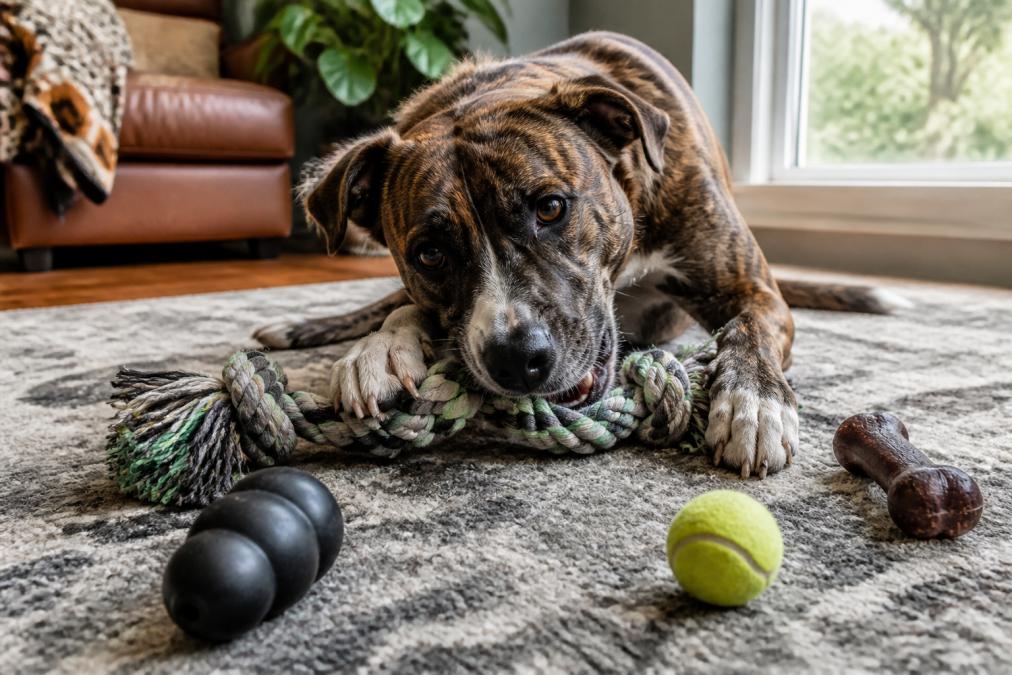
Durable dog toy materials flex, compress, or fray gradually under bite force rather than cracking or shattering. The best against a determined chewer: heavy-duty nylon, natural rubber, tightly woven cotton rope, and flexible TPR rubber.

How to Stop a Dog From Destroying Toys (and Everything Else)
Stopping destructive chewing starts with the cause, not the symptom. Dogs chew for four reasons: teething discomfort, boredom, excess energy, and anxiety. A toy that ignores the reason gets destroyed no matter how tough it is.
- Boredom: Puzzle feeders and snuffle toys that turn a meal into a task
- Excess energy: Interactive chase toys that burn physical stamina
- Anxiety: Licking and heartbeat comfort toys that calm the nervous system
- Teething: Soft latex and foam toys that soothe gums without cracking
Interactive vs. Solo Play: Matching the Toy to Your Dog's Chew Intensity
Interactive toys require you to participate; solo toys keep your dog occupied independently. The right mix depends on chew intensity and your available play time.
| If your dog... | Choose | Because |
|---|---|---|
| Destroys toys in minutes | Puzzle feeder or dental chew | Redirects chewing into a task |
| Has endless energy | Herding Ball | Burns stamina through movement |
| Chews when left alone | Lick mat or heartbeat toy | Addresses anxiety, not boredom |
| Needs dental help | Rope or dental chew toy | Friction cleans teeth while chewing |
How to Choose the Right Toy Size for Your Dog
Toy size should match your dog's mouth, not its body weight alone. A toy small enough to swallow is a choking hazard; one too large to grip gets ignored. Size up when in doubt, but a toy so big your dog can't get it behind the molars won't get chewed, and an unchewed toy gets abandoned for a chair leg.
Age changes the answer more than breed does
A puppy, an adult power chewer, and a senior dog can be the same breed and weight and still need three different toys.
- Puppies (under about 6 months): Developing teeth and soft gums. Firm rubber that gives under pressure, plus textured surfaces for teething. Avoid dense nylon and hard plastic, which can chip deciduous teeth or damage incoming adult teeth.
- Adolescents (6-18 months): The peak destruction window. Jaw strength is climbing, but the dog is still learning what's appropriate to chew. This is when rope, flexible TPR, and puzzle feeders earn their keep, the goal is redirection, not just survival.
- Adults (1-7 years): Full bite force. This is the group that actually needs the heavy-duty nylon, thick natural rubber, and tightly woven rope. Size up here, and expect to replace rope toys every few weeks.
- Seniors (7+ years): Enamel is worn, gums may be sensitive, and arthritis can make gripping a large toy painful. Softer foam and latex toys that are still too big to swallow are usually the better call, even for dogs that used to shred everything.
Match the toy to the mouth, not the breed chart. A 6-inch toy that fits comfortably between the paws and cannot be swallowed is safer and more engaging than an oversized one your dog abandons, and the right material changes again as your dog ages.
Signs of Wear and Tear: When to Retire a Toy
Retire a toy the moment it shows structural damage, not when it falls apart. Cracks, exposed squeakers, loose threads, and missing chunks are end-of-life signals. A failing toy is more dangerous than a new one: broken pieces become choking hazards, and the material breaks down in ways you can't see.
Run this quick inspection every week:
- Squeeze the toy end to end and check for cracks or splits
- Look for exposed squeakers, stuffing, or internal parts
- Check rope toys for loose or frayed strands
- Feel for missing chunks or chewed-off edges
- Confirm treat compartments still seal properly
- Wash fabric toys and check seams after drying
- Smell the toy, a persistent chemical or burnt-rubber odor can signal material breakdown
The safety question most guides skip: what's actually in the toy
When a heavy chewer destroys a toy, small amounts of material end up in the dog's mouth. That makes the material itself a safety question, not just a durability question.
Herding Ball for Dogs — 17.7" →
A few things worth checking before you buy:
- Look for "BPA-free" and "phthalate-free" labeling. These are the two plasticizer and additive categories most commonly flagged in chew toys, and many reputable manufacturers now print them on the package.
- Prefer food-grade or medical-grade silicone and natural rubber over mystery "TPR" or generic "rubber" when the label doesn't specify. If a manufacturer won't say what the material is, that's a signal.
- Avoid toys with strong chemical odors out of the package. A faint rubber smell is normal; a sharp solvent or plastic smell is not.
- Check for small glued-on parts. Eyes, noses, and squeaker caps are the first things a determined chewer removes, and they're also the most likely to be swallowed.
- Watch for painted surfaces and dyed fabrics on toys for dogs that shred. Loose dye and flaking paint are ingestion risks, not just messes.
Replacement cycles by material
Replacement cycles vary by material and chew intensity, not by calendar:
- Rope toys: Weeks for a power chewer, months for a gentle chewer. Retire at the first loose strand.
- Flexible TPR and natural rubber: Usually one to three months under heavy use. Retire when chunks go missing or the surface develops deep gouges.
- Heavy-duty nylon: Can last many months, but inspect for sharp edges where the surface has been worn down, those edges can abrade gums.
- Plush and fabric toys: Days to weeks for a shredder. These are comfort toys, not chew toys, and should be treated as supervised-only for heavy chewers.
Never let a dog play unsupervised with a toy that has already been chewed down to a nub. The final stage of a toy's life is when most choking incidents happen, and the fix is simply to throw it away earlier than feels necessary. The same rule applies the moment a toy starts shedding material, if you can rub pieces off with your thumb, your dog can too.
Conclusion: Choosing Toys for Dogs That Destroy Everything
Buying toys for dogs that destroy everything isn't about finding one mythical indestructible object. It's about matching material, size, and play style to the real reason your dog chews. Get that right and the destruction stops, not because the toy is unbreakable, but because your dog no longer needs to improvise.
Frequently Asked Questions
Why does my dog destroy all their toys?
Destructive chewing usually traces back to natural chewing instincts that need an outlet, boredom, or pent-up energy. High-energy breeds and working dogs often chew harder when they lack mental stimulation or physical exercise. Puppies also chew through toys during teething. The fix is not punishment but redirection: offer tougher, appropriate chews and add enrichment like food-dispensing puzzle toys that give the mouth and brain a job. If destruction is sudden in an adult dog, a vet visit can rule out dental pain or anxiety.
Are there truly indestructible dog toys?
No toy is truly indestructible, and any brand claiming otherwise should be treated with caution. What exists are durable toys built from tougher materials and thicker construction that hold up far longer under heavy chewing. Even the strongest options wear down over time and need regular inspection. The practical goal is a longer replacement cycle and safer play, not a toy that lasts forever. Always supervise play and remove any toy showing cracks, holes, or loose pieces.
What are the best toys for strong chewer dogs?
For strong chewer dogs, look for thick natural rubber, heavy-duty woven rope, or dense TPR rubber rather than thin plush or soft foam. Interactive options like a treat-stuffed dental chew toy or a large inflatable herding ball redirect chewing energy into active play. Rotate two or three tough toys instead of leaving one out all week, since novelty keeps dogs engaged. Match the toy's toughness rating to your dog's actual chew intensity, not just their size.
How do I choose the right size toy for a heavy chewer?
A toy that is too small becomes a choking hazard for a determined chewer, so size up when in doubt. As a rule, choose a toy your dog cannot fit entirely in their mouth and swallow. Large breeds need toys with enough surface area to bite down on without compressing the whole object. Check the product's stated size, like the 17.7-inch herding ball or the 20cm snuffle ball, and pick the larger option for medium-to-large dogs.
How do I stop my dog from destroying furniture and shoes?
Redirect the behavior instead of trying to suppress it. Keep personal items out of reach, provide several approved chew options with different textures, and add daily mental stimulation through puzzle feeders, snuffle toys, or lick mats. A tired, mentally satisfied dog chews far less. When you catch your dog chewing the wrong thing, swap in an appropriate toy immediately and praise the swap. Consistency over a few weeks matters more than any single correction.


